Wallaroos: Australia’s Rugged and Resilient Macropods
- Wallaroos: More Than Just a Name
- Key Wallaroo Species and Subspecies
- Where Wallaroos Roam: Habitat and Distribution
- Built for the Bush: Physical Characteristics
- What’s on the Menu: Diet and Foraging
- Bringing Up Joey: Reproduction and Lifecycle
- The Wallaroo Identity: Distinguishing Them from Relatives
- Holding Their Own: Conservation Status
- Wallaroo Wonders: Fascinating Facts
- Understanding and Protecting Wallaroos
Wallaroos: Australia’s rugged and resilient macropods are often a point of confusion for visitors and even some locals, sitting somewhere between a kangaroo and a wallaby in size and, perhaps, in public recognition. Having spent time exploring Australia’s diverse landscapes, from the arid interior to the rocky escarpments, I’ve had the privilege of encountering these fascinating marsupials in their natural habitat. They’re incredibly well-adapted creatures, perfectly suited to the often harsh conditions they call home. This article will delve into the world of wallaroos, exploring their unique characteristics, where they live, and what makes them such a vital part of the Australian ecosystem. You might think you know Australian wildlife, but there’s more to these guys than meets the eye!
When we talk about wallaroos, we’re generally referring to several species of macropods that are, as the name suggests, intermediate in size between the larger kangaroos and the smaller wallabies. The name itself, “wallaroo,” is believed to have originated from the Dharug language, influenced by the words “kangaroo” and “wallaby.” It’s a fitting name for an animal that seems to embody traits of both.
Key Wallaroo Species and Subspecies
While the term “wallaroo” is a common name applied to several species within the genus Osphranter, the best known is the Common Wallaroo (Osphranter robustus). But even within this single species, you find fascinating variations. The Common Wallaroo has four recognised subspecies, each with slightly different appearances and geographical ranges across Australia.
- The Eastern Wallaroo (O. r. robustus): Found on the eastern slopes of the Great Dividing Range, males of this subspecies often sport a dark grey coat, while females are typically lighter, with a sandy colouration.
- The Euro or Western Wallaroo (O. r. erubescens): This subspecies is widespread across the rest of the Common Wallaroo’s range to the west. They are typically brownish in colour, though their appearance can be quite variable.
- The Barrow Island Wallaroo (O. r. isabellinus): Restricted to Barrow Island off the coast of Western Australia, this is a smaller subspecies and is uniformly reddish-brown. Interestingly, this is the only subspecies of the Common Wallaroo currently classified as vulnerable.
- The Kimberley Wallaroo (O. r. woodwardi): Inhabiting the Kimberley region of Western Australia and parts of the Northern Territory, this subspecies is the palest of the four, with a dull brown-grey coat.
Beyond the Common Wallaroo, there are other species also referred to as wallaroos. The Black Wallaroo (Osphranter bernardus) is a smaller, stockier species found in the rocky areas of Arnhem Land. Then there’s the Antilopine Wallaroo (Osphranter antilopinus), which is a bit of an anomaly as it’s sometimes called an Antilopine Kangaroo or even an Antilopine Wallaby depending on its size! Unlike other wallaroos, the Antilopine wallaroo is more gregarious, preferring grassy plains and woodlands rather than rocky outcrops.
Where Wallaroos Roam: Habitat and Distribution
Wallaroos are incredibly adaptable and can be found in a wide variety of habitats across Australia, though they are absent from Tasmania. My own observations suggest they have a strong preference for rugged, rocky terrain. These areas provide essential shelter from the harsh Australian sun and predators. Think steep escarpments, rocky hillsides, and areas with caves or overhangs. They are also sometimes found in shrublands, particularly near water sources.
Their ability to thrive in areas without permanent water is pretty impressive. Wallaroos can often go for two to three months without needing to drink, obtaining most of the water they need from the plants they eat.
The distribution varies by species and subspecies. The Common Wallaroo is the most widespread, found throughout most of the continent. The Black Wallaroo, as mentioned, is restricted to a specific rocky area in Arnhem Land. The Antilopine Wallaroo is found in the savanna woodlands of northern, tropical Australia.
Built for the Bush: Physical Characteristics
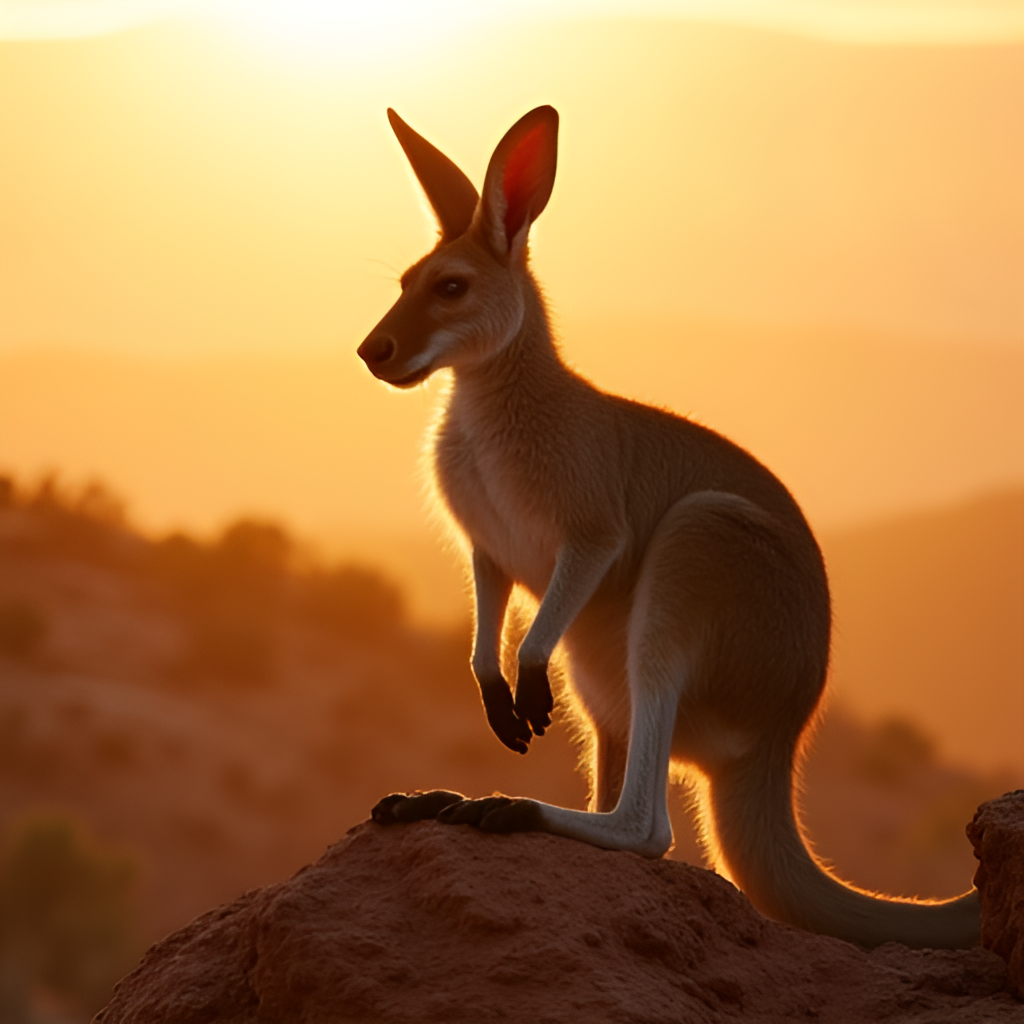
So, what sets a wallaroo apart physically? They’re generally more stocky and robust than wallabies, with a more heavily built frame. Their fur is often described as coarse and shaggy. Common Wallaroos, for instance, can range in colour from reddish-brown to a very dark blue-grey.
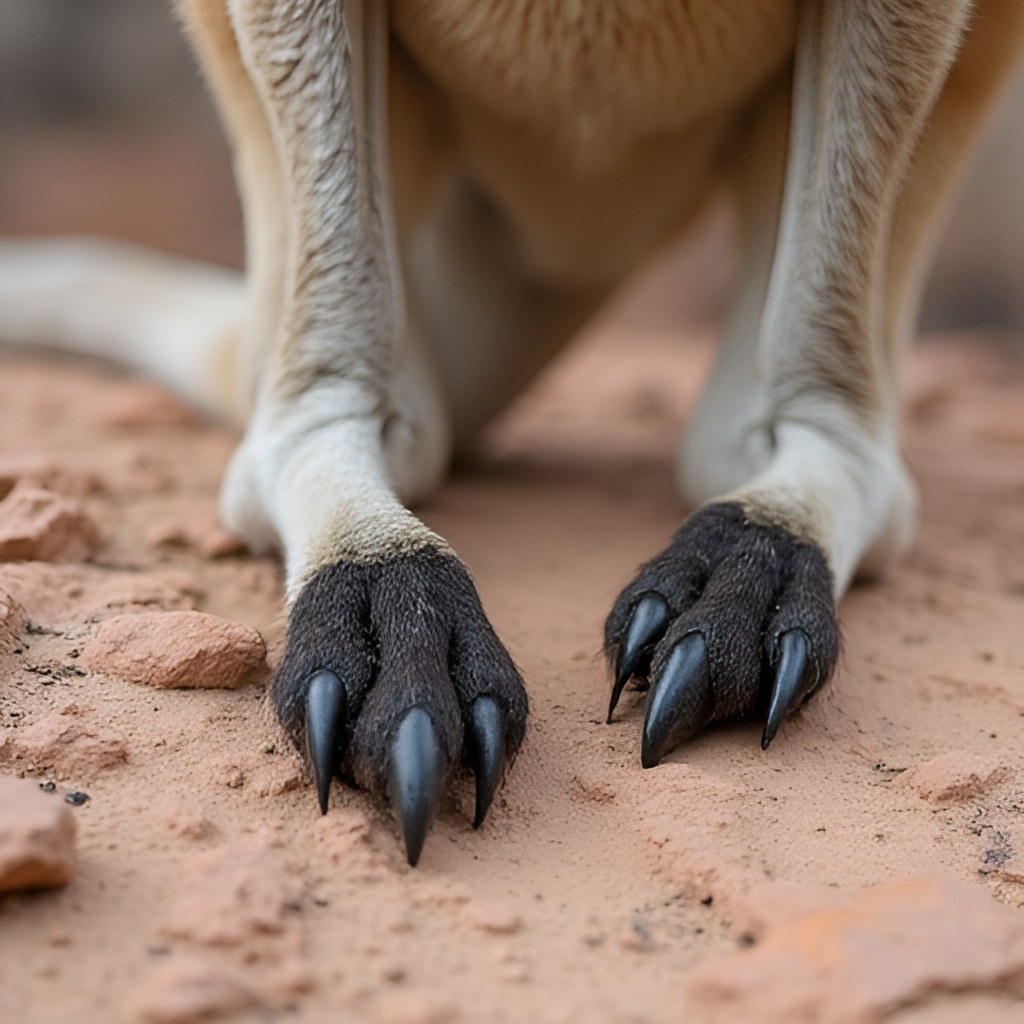
One of the key physical adaptations for their rocky habitat is their limbs. Wallaroos have shorter limbs, particularly hind legs and tails, compared to kangaroos. This shorter limb structure is thought to aid in balance and agility when navigating uneven, rocky ground. Their hind feet are also short and broad, with roughened soles that provide extra grip on slippery surfaces.
Sexual dimorphism is quite pronounced in many wallaroo species, with males being significantly larger and heavier than females, sometimes even twice the size.
This image is a fictional image generated by GlobalTrendHub.
What’s on the Menu: Diet and Foraging
Like most macropods, wallaroos are herbivores. Their diet primarily consists of grasses and shrubs. They have specialised teeth adapted for cropping grass and complex stomachs, similar to ruminants, to help break down tough plant fibres.
Their foraging behaviour is often influenced by temperature. In hotter conditions, they tend to be more nocturnal, resting during the day in shaded areas like caves or rock overhangs and coming out to feed in the cooler evenings.
Bringing Up Joey: Reproduction and Lifecycle
Wallaroos are fascinating when it comes to reproduction. They are opportunistic breeders and can breed throughout the year if conditions are favourable, although prolonged droughts can impact this. They are also polygynous, meaning one male will typically mate with multiple females.
After a gestation period of around 30 to 38 days, a single, tiny joey is born. This incredibly underdeveloped newborn, often only a few centimetres long, makes the arduous journey from the birth canal to the mother’s pouch, where it attaches to a teat. The joey remains in the pouch, suckling and developing, for a significant period, typically around 6 to 9 months.
One remarkable adaptation seen in wallaroos, and many other macropods, is embryonic diapause. This allows the female to mate again shortly after giving birth, but the development of the new embryo is halted until the older joey is about to leave the pouch or, tragically, if the existing joey is lost. This ensures that under good conditions, the female can have a continuous cycle of reproduction.
The Wallaroo Identity: Distinguishing Them from Relatives
The question of “kangaroo vs. wallaroo vs. wallaby” comes up a lot! While all are macropods and share similarities, there are key differences. Size is often the most obvious distinction, with kangaroos being the largest, wallabies the smallest, and wallaroos falling in between. However, size isn’t always a foolproof indicator as there’s some overlap, particularly with smaller kangaroo species and larger wallaby species.
Habitat preference is another clue. While kangaroos often favour open grasslands for speed, and wallabies are more agile in denser bushland or rocky areas, wallaroos specifically thrive in rugged, hilly, and rocky country. Their physical adaptations, like shorter limbs and grippy feet, reflect this.
Tooth structure also differs scientifically, with wallabies retaining premolars that kangaroos shed. While you’re unlikely to be inspecting their molars in the wild, it’s a biological difference that helps scientists classify them.
This image is a fictional image generated by GlobalTrendHub.
Holding Their Own: Conservation Status
For the most part, wallaroos are doing reasonably well. The Common Wallaroo is currently listed as “Least Concern” by the IUCN, largely due to its wide distribution and presence in protected areas. However, as mentioned earlier, the Barrow Island subspecies (O. r. isabellinus) is classified as vulnerable. The Black Wallaroo is also listed as “Near Threatened” due to its restricted range.
Like many Australian native animals, wallaroos face threats from habitat loss and fragmentation due to human development, as well as predation from introduced species like feral dogs. In some areas, they are also considered agricultural pests, leading to culling.
Wallaroo Wonders: Fascinating Facts
Here are a few cool facts about wallaroos that I’ve picked up:
- They can make a loud hissing noise when alarmed.
- Despite being primarily terrestrial, wallaroos are surprisingly good swimmers, using their hind legs independently in the water.
- In some Aboriginal languages, like Kunwinjku, there are different names for male and female Black Wallaroos.
- Wallaroos have continuously growing teeth, an adaptation that helps them cope with a diet that can include tough, abrasive grasses like spinifex.
Understanding and Protecting Wallaroos
Wallaroos: Australia’s rugged and resilient macropods are truly remarkable creatures, perfectly adapted to their often challenging environments. My experiences seeing them navigate steep rocky outcrops or finding shelter in cool caves have given me a deep appreciation for their resilience. Understanding the distinctions between wallaroos, kangaroos, and wallabies, and appreciating their unique ecological roles, is crucial for their conservation. While the Common Wallaroo is currently not considered threatened, we must remain mindful of the vulnerable subspecies and the ongoing pressures these animals face from habitat loss and other factors. Protecting their rugged homes means protecting these incredible marsupials for future generations to admire.